Swarm UAVs Score Direct Hits in Live Ammunition Test
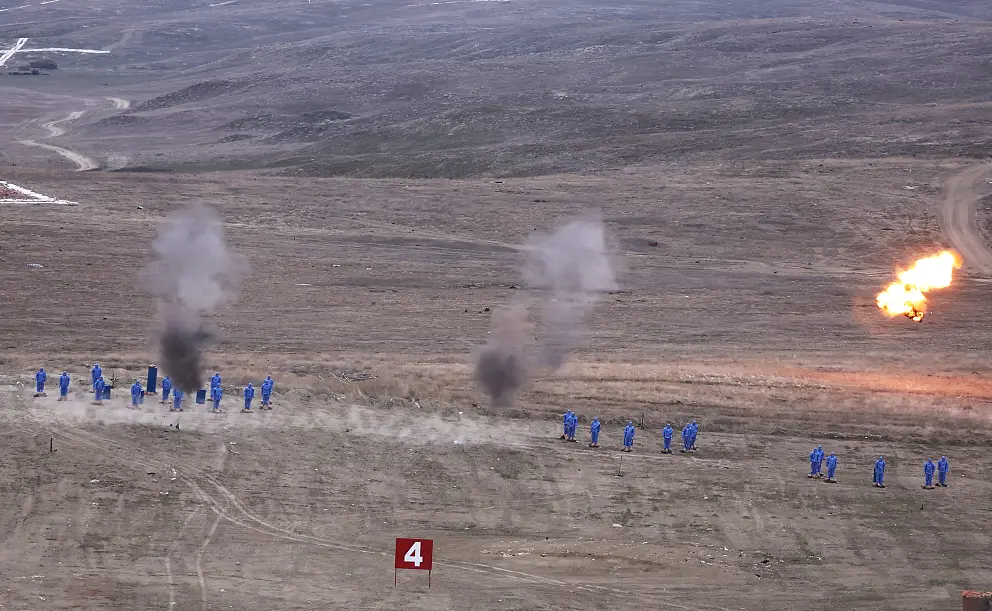
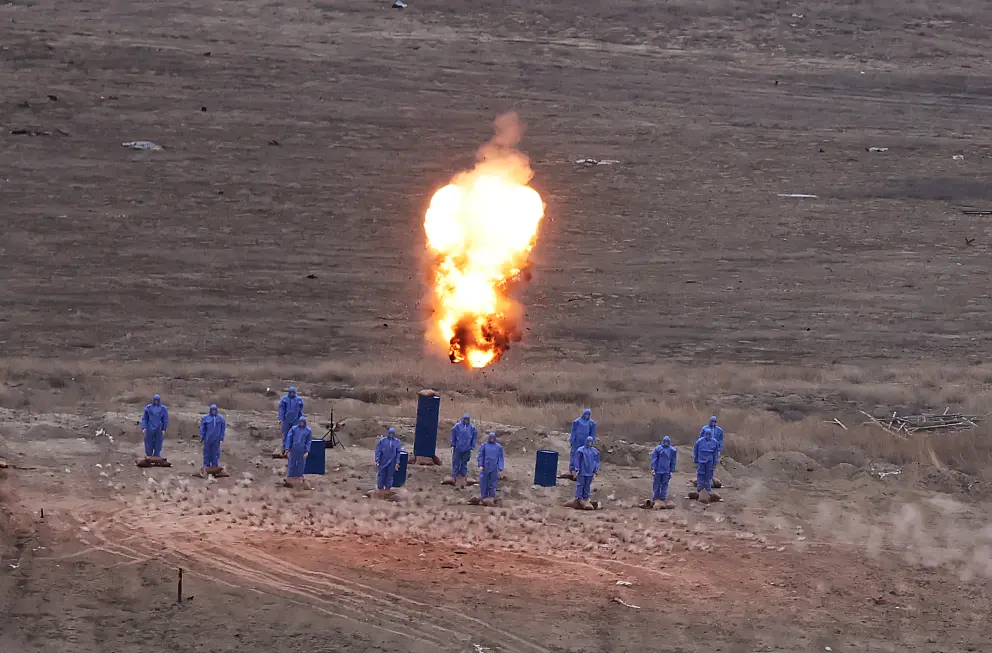
STM has achieved a historic milestone in swarm UAV technologies. As part of its swarm UAV capability development, a swarm consisting of 20 KARGU loitering munitions successfully struck designated targets with direct hits during Türkiye’s first-ever live ammunition swarm test.
As one of Türkiye’s leading defence engineering companies, STM continues to demonstrate game-changing capabilities in autonomous warfare. The activity was conducted at the General Nahit Şenoğul Firing and Training Area in Polatlı, Ankara, marking the first time STM’s swarm UAVs were tested in an environment involving live ammunition detonations.
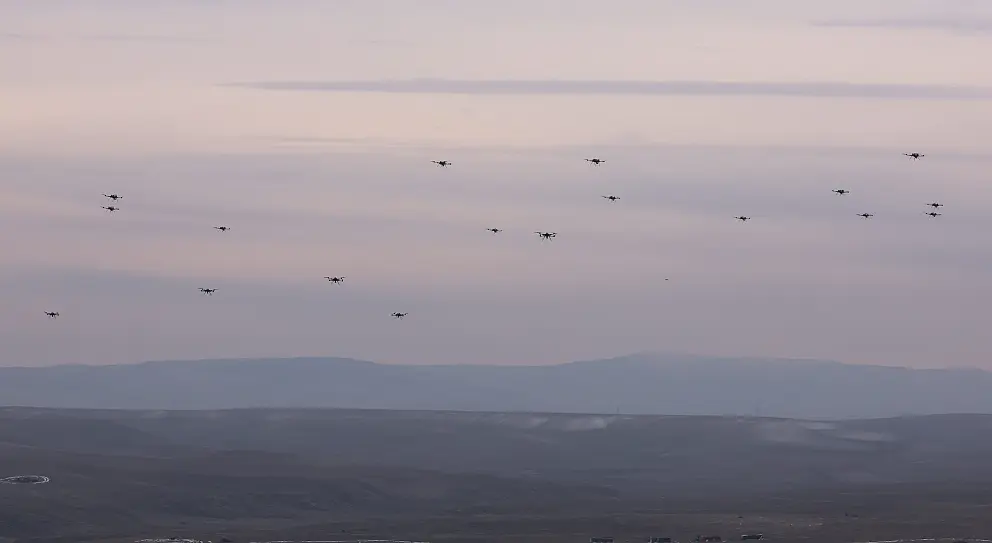
During the test, the KARGU swarm powered by fully indigenous swarm intelligence algorithms and a distributed architecture operated under the control of a single operator. Following take-off, the swarm autonomously navigated to the mission area. Upon arrival, the KARGU UAVs autonomously divided into sub-swarms assigned to three separate targets and executed a simultaneous attack upon a single operator command.
Equipped with anti-personnel warheads, the KARGU systems demonstrated their ability to communicate among themselves through their distributed architecture, achieving high precision, synchronized engagement, and operational reliability under live ammunition conditions.
Full Marks from Senior Military Authorities
The activity was observed on-site by Prof. Dr. Haluk Görgün, Secretary of Defence Industries of the Republic of Türkiye (SSB); Lieutenant General Gültekin Yaralı, Commander of the Land Forces Training and Doctrine Command; Lieutenant General Ahmet Kurumahmut, Commander of the 4th Corps and Ankara Garrison Commander; along with senior military delegations. STM’s swarm UAV attack capability received full marks from the command authorities.
Güleryüz: This Achievement Marks a New Threshold in Türkiye’s Autonomous Warfare Capability
STM General Manager Özgür Güleryüz underlined that the achievement carries not only technical but also strategic significance:
“Swarm UAV technologies have become one of the most critical game-changers on the modern battlefield. At STM, we are proud to have proven our swarm intelligence architecture—developed entirely with indigenous software and algorithms—through a live ammunition test conducted under real operational conditions. The coordinated engagement carried out by swarm-enabled KARGU systems using live ammunition clearly demonstrates the level Türkiye has reached in autonomous systems, artificial intelligence, and swarm warfare concepts. This capability represents a strategic threshold that will shape not only today’s operational needs but also future warfare concepts. With this achievement bearing the signature of STM engineering, we once again reaffirm our determination to position Türkiye among the world’s leading nations in swarm intelligence.”
A First for Türkiye, Among a Select Few Worldwide
This successful swarm UAV attack test conducted with live ammunition marks a first for Türkiye, while also demonstrating that the country now possesses advanced swarm operation capabilities held by only a limited number of nations worldwide. Thanks to STM’s distributed control-based swarm intelligence architecture, the system exhibited high flexibility and resilience, maintaining mission continuity even when certain elements became inoperative during the operation.
STM Swarm UAV Capabilities
Powered by STM’s proprietary algorithms and software, tactical UAVs within STM’s swarm system can communicate with one another in real time, perform target detection, sharing, and prioritization, and execute coordinated swarm attacks autonomously.
The swarm intelligence architecture does not rely on a central control unit, allowing each UAV to independently make mission decisions. This distributed control structure ensures mission continuity even if one or more platforms are lost, significantly increasing mission success. Operating under the saturation attack concept, the system enables multiple UAVs to simultaneously navigate toward target areas, saturate enemy defenses, and neutralize them effectively.
STM’s algorithms enable UAVs within the swarm to engage targets based on their payload types. For example, UAVs equipped with anti-personnel or armor-piercing warheads can autonomously distinguish between personnel and vehicle targets and engage accordingly. The system also supports real-time swarm expansion or reduction, dynamic mission updates, and the execution of multiple sub-missions within the operational area.
Key Capabilities
- Swarm intelligence algorithms
- Saturation attack concept
- Distributed control architecture
- Inter-UAV communication infrastructure
- Autonomous formation generation and sustainment
- Collision avoidance system
- Real-time target detection and classification
- In-swarm task sharing
- Target prioritization and task assignment
- CRPA-enhanced anti-jam navigation
- GNSS-denied navigation with KERKES integration
- Swarm division and reunion
- Real-time swarm attachment and detachment
Similar News