STM Redefines the Boundaries of Unmanned Systems with “Multi-Domain”
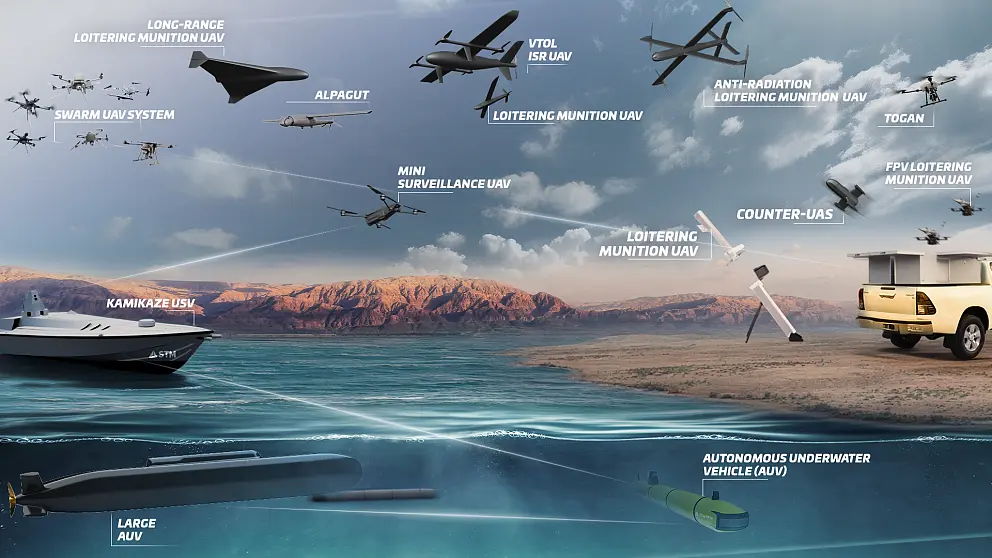
STM, a leading technology company in Türkiye’s defense industry, is transforming unmanned systems into an integrated and coordinated operational force through its “Multi-Domain” concept—an approach that connects land, air and naval platforms under a shared mission awareness. By enabling different operational elements to function as a unified whole, STM’s Multi-Domain (MDO) architecture aligns with the evolving requirements of modern, network-enabled warfare.
In line with Türkiye’s goal of achieving full defense industry independence, and under the leadership of the Presidency of the Republic of Türkiye, Secretariat of Defence Industries, STM continues to introduce innovative systems while advancing a new vision in unmanned technologies. To date, STM has developed and fielded tactical unmanned aerial systems including the KARGU, ALPAGU and KARGU FPV loitering munition systems; the TOGAN and STM-VTOL reconnaissance UAVs; the BOYGA and BOYGA-B ammunition drop UAVs; as well as the STM NETA unmanned autonomous underwater vehicle. Building on this product portfolio, STM is implementing its Multi-Domain concept to ensure these systems operate in an integrated and coordinated manner within a common operational framework.
Autonomy and Swarm Integration at the Core of Multi-Domain Operations
Today’s battlespace demands more than individual platform performance—it requires synchronized, multi-layered coordination. STM’s asymmetric power approach focuses on generating high operational impact through smaller, agile and unmanned platforms rather than relying solely on large and costly systems. At more advanced levels, this approach enables unmanned systems to become decisive operational assets, delivering decision superiority and reshaping tactical concepts in complex operational environments.
STM’s swarm UAV technologies, combined with GNSS-independent operational capability and a high-autonomy software and systems engineering infrastructure, form the backbone of this concept. Through visual navigation and advanced mission algorithms, unmanned systems can continue operations even in electronically contested environments, share threat information within the swarm, and dynamically allocate tasks in real time. STM’s advanced system integration expertise enables different types of platforms to operate seamlessly under a unified command-and-control (C2) architecture—reflecting the core principles of NATO’s Multi-Domain Operations framework.
Heterogeneous Swarms: A Game-Changing Architecture in the Battlespace
At the heart of STM’s Multi-Domain vision lies the heterogeneous swarm architecture. A heterogeneous swarm refers to the coordinated operation of unmanned systems with different types and capabilities within the same mission framework. In contrast to homogeneous swarms composed of identical platforms, heterogeneous swarms may include aerial, ground, surface and subsurface systems working together in a synchronized manner.
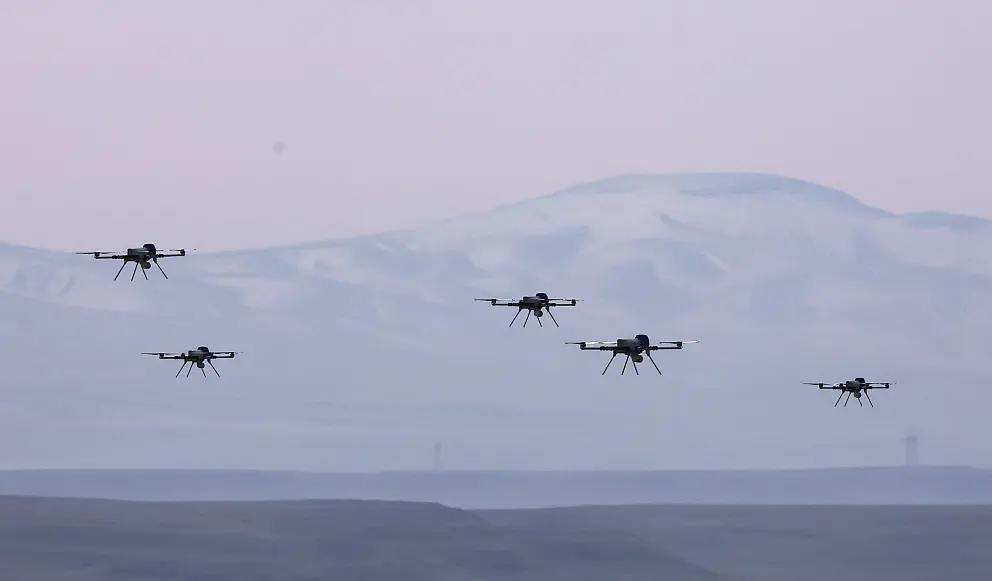
This architecture allows reconnaissance, suppression, area control, infiltration and engagement missions to be distributed across air, land, surface and subsurface unmanned assets. By ensuring each platform performs the task for which it is best suited—while maintaining real-time data exchange—this structure enhances operational flexibility and delivers multi-layered operational superiority.
In January, STM achieved a global first by successfully conducting a live-munition kamikaze mission with a 20-element KARGU loitering munition swarm during an exercise. The experience gained from this milestone provides a strong foundation for extending heterogeneous swarm architecture across surface, subsurface, air and land domains. In particular, newly developed operational scenarios against air defense systems highlight the role swarm technologies are expected to play in the future tactical battlespace.
STM Expands Its Unmanned Systems Family
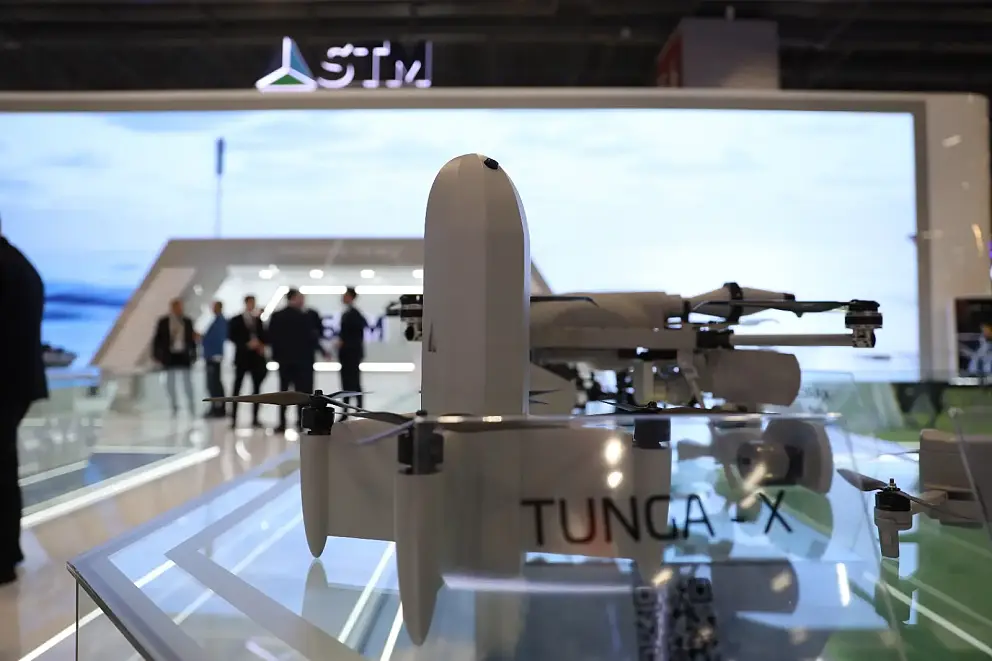
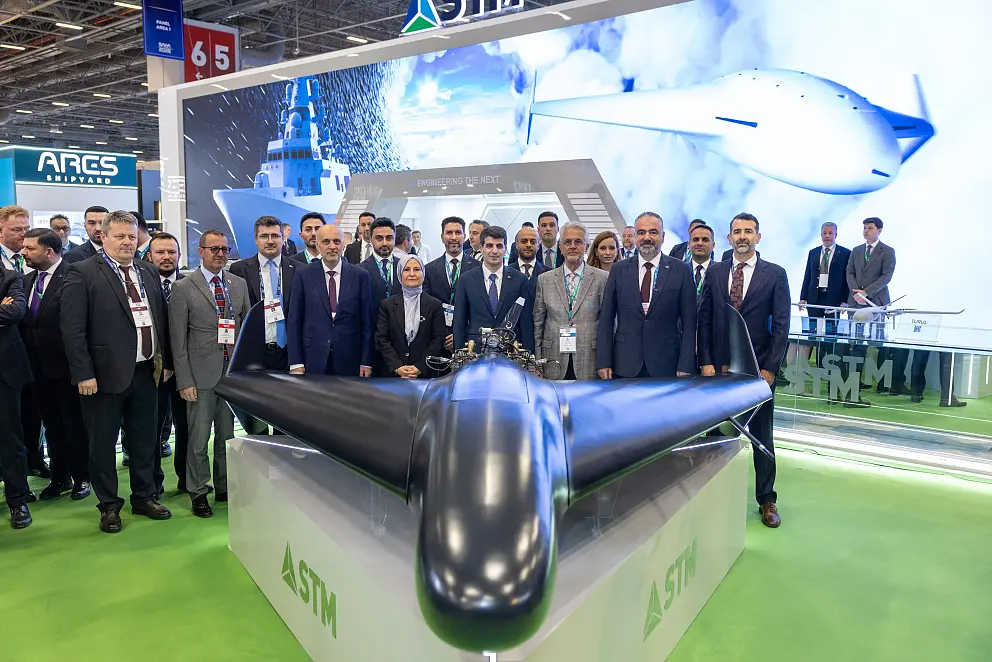
STM is preparing to further expand its unmanned systems portfolio in the coming period. Planned additions include a Long-Range Loitering Munition UAV, a Mini Reconnaissance UAV, an Anti-Radiation Loitering Munition, Counter-UAV systems, and a Large Autonomous Underwater Vehicle.
With these next-generation solutions, STM aims to elevate its Multi-Domain approach to a higher level—building an integrated, scalable and high-impact unmanned systems ecosystem. By combining advanced autonomy, GNSS-independent navigation, swarm intelligence and multi-domain integration capabilities, STM continues to strengthen its contribution to Türkiye’s defense capacity while positioning itself as a competitive technology provider in the global defense landscape.
Similar News