Multi-Domain Operational Capability
Today’s battlespace has evolved into a multi-layered environment in which land, air, surface and subsurface elements operate simultaneously and in coordination. This new structure requires platforms to function not individually, but as an integrated whole—capable of communicating with one another, sharing data, and acting with a common mission awareness. In response to this need, STM has developed a next-generation engineering approach through its Multi-Domain Operations (MDO) concept, integrating different operational environments within a unified architecture.
At the core of this approach lies the concept of “asymmetric power.” Asymmetric power refers to the ability to generate high operational impact through smaller, more agile, and unmanned platforms instead of large and costly systems. More advanced stages of this concept represent scenarios in which unmanned systems are no longer merely supporting assets, but decisive operational elements that challenge traditional defense structures and reshape tactical paradigms.
Autonomy, Visual Navigation and the KERKES Capability
Under the auspices of the Secretariat of Defence Industries, STM is leading the KERKES project, through which a visual navigation capability has been developed to address one of the most critical vulnerabilities of unmanned systems: position estimation. By using passive methods, unmanned systems can determine their position without reliance on external signals. This capability reduces GNSS dependency and ensures mission continuity even in electronically contested environments.
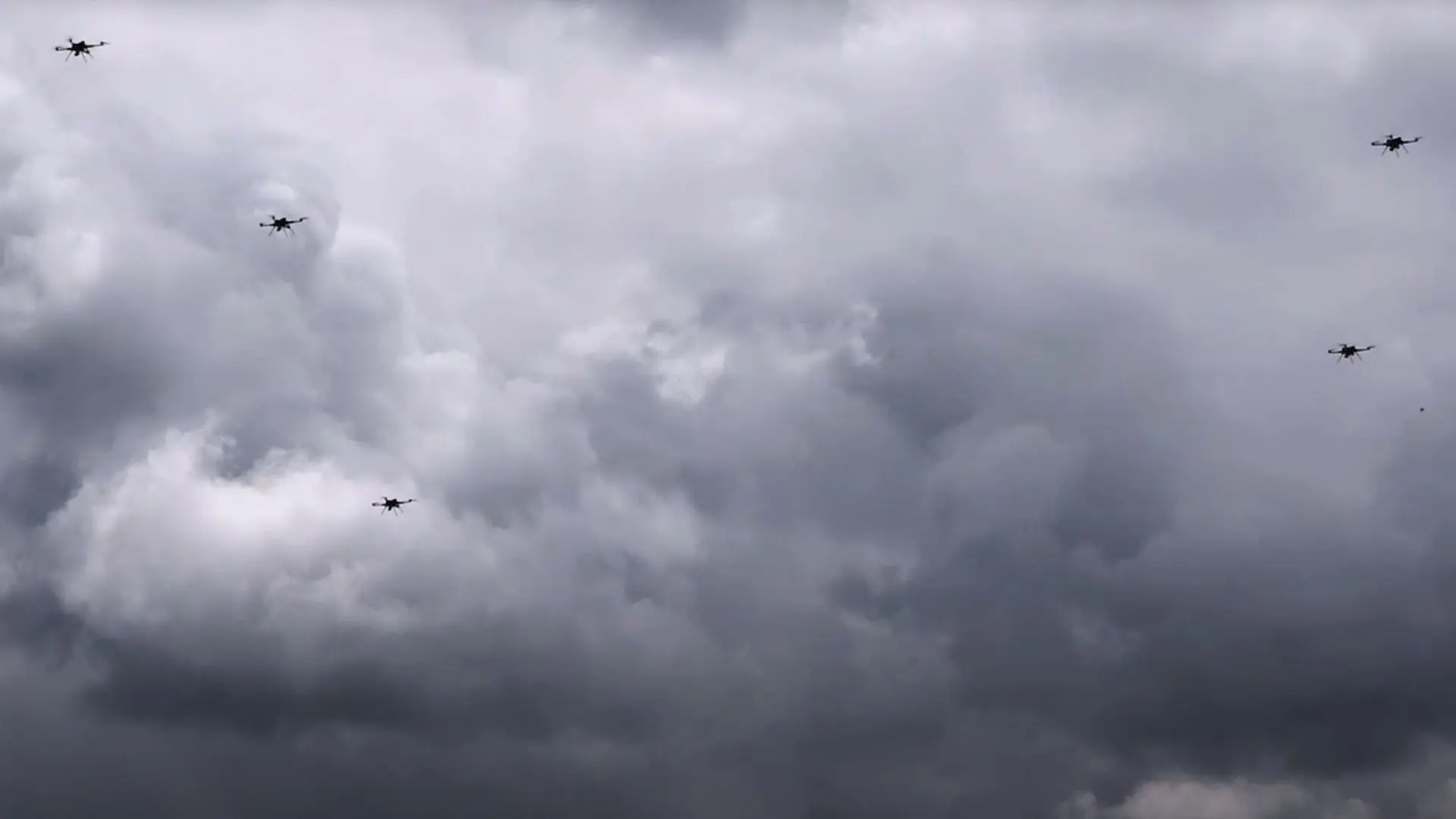
Swarm UAV technology, prepared to undertake conventional operational roles, has reached a higher level of autonomy through the integration of the KERKES capability. As a result, swarm elements can share threat data in real time, dynamically adjust formations, execute multiple tasks simultaneously with different payload configurations, and, when required, operate alongside different types of unmanned systems within a scalable heterogeneous structure. All these capabilities have been demonstrated within a military-standard architecture that preserves human-in-the-loop control in the decision-making process.
Heterogeneous Swarms: A True Multi-Domain Force Multiplier
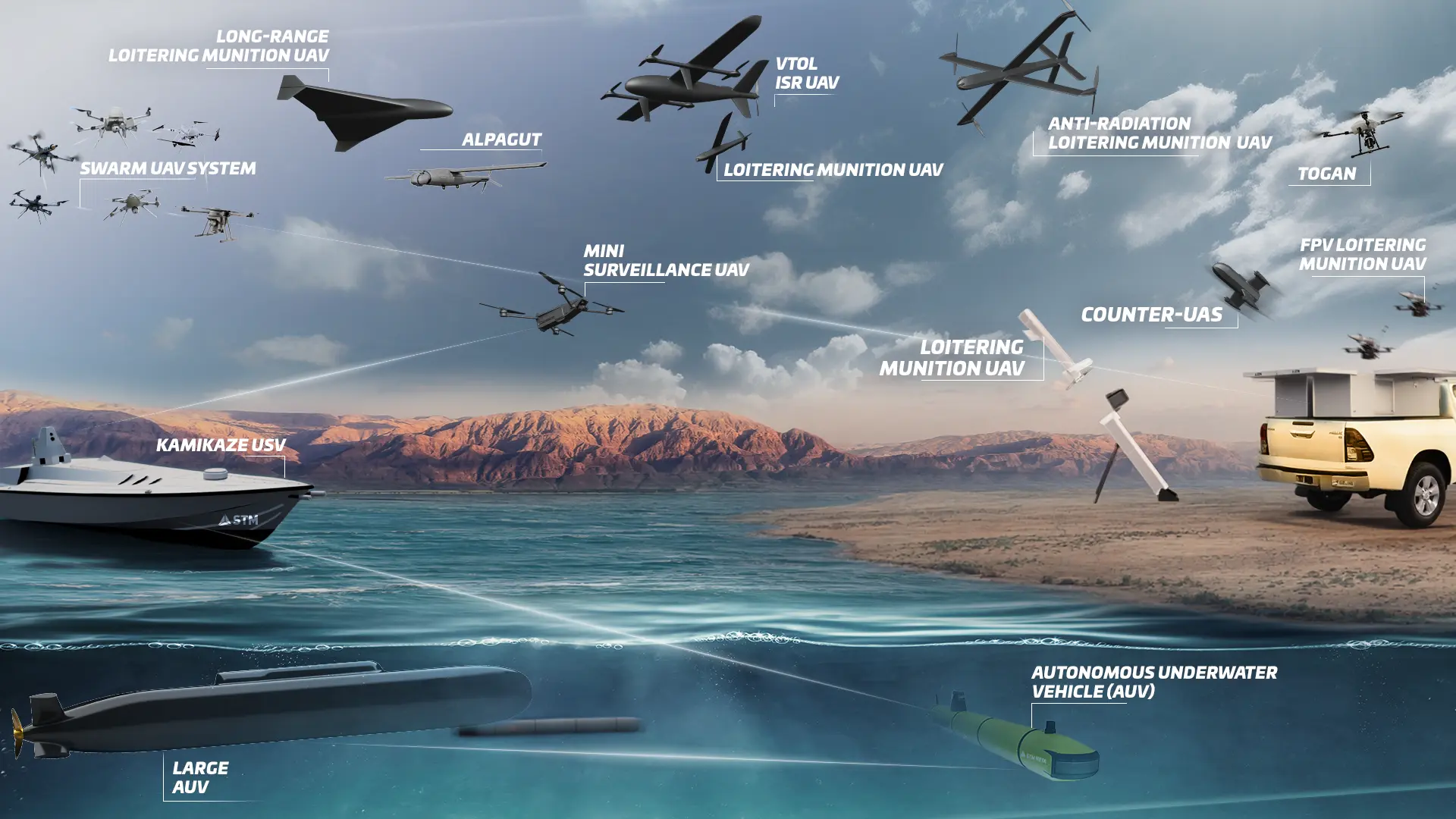
STM’s vision extends beyond swarm technology itself to the concept of heterogeneous swarm architecture. A heterogeneous swarm refers to unmanned systems of different types and capabilities operating together within the same mission framework. In contrast to homogeneous swarms—composed of identical platforms—heterogeneous swarms may include reconnaissance UAVs, loitering munitions, and unmanned surface or ground systems operating in coordinated fashion within a single operation.
This structure enables each platform to perform the task for which it is best suited, while maintaining real-time data exchange and shared mission awareness—significantly enhancing operational flexibility and effectiveness.
Within this framework:
- Air elements conduct reconnaissance and suppression missions,
- Surface and subsurface systems perform area control and infiltration tasks,
- Ground elements execute targeting and engagement functions,
- All units operate through real-time data sharing to enable joint operations.
STM is conducting intensive engineering and field exercises on the heterogeneous multi-domain asymmetric swarm concept, which has not yet been fully proven in combat environments worldwide. The company continues its efforts with the objective of positioning Türkiye among the leading nations in this field.
Live-Munition Military Swarm Capability
STM has achieved a significant milestone by conducting the world’s first live-munition kamikaze mission with a 20-element military UAV swarm during an exercise. This experience has established a strong foundation for extending heterogeneous swarm architecture across surface, subsurface, air and land domains. In particular, concept development and testing activities against air defense systems demonstrate how swarm technologies will be positioned within next-generation tactical warfare.
Next-Generation Integration and Collaboration Ecosystem
Multi-Domain swarm systems require not only platform development, but also advanced system integration under a unified command-and-control architecture. Leveraging its extensive integration expertise, STM combines its engineering capabilities with the domestic defense industry ecosystem to expand the boundaries of next-generation engineering.
Heterogeneous Multi-Domain unmanned swarm systems are positioned as a force architecture that:
- Enhances the multiplier effect of human resources,
- Provides cost-effective solutions,
- Redefines tactical usage concepts,
- Delivers multi-layered operational superiority.
STM: Ready for the Future Battlespace
With its expert Autonomous Systems team, STM continues its determined efforts to bring together diverse payloads, varied swarm elements, and Multi-Domain integration capabilities under a unified operational architecture spanning land, air, surface and subsurface domains.
The Multi-Domain approach is not merely a concept; it is a comprehensive engineering vision designed to ensure superiority in the future battlespace. Through its heterogeneous swarm unmanned systems, STM delivers solutions that enhance human effectiveness, provide cost-efficiency, and transform tactical doctrines—aiming to establish a globally leading capability in next-generation operational concepts.